The Right Paper for Every Book
From creamy uncoated offset for immersive reading to vibrant coated art paper for stunning visuals — paper is 30–50% of your book's cost and 100% of its feel.
Uncoated Paper / Offset Paper
Natural fiber surface — no mineral coating. Absorbs ink deeply for a warm, glare-free reading experience. The industry standard for novels, memoirs, and text-heavy books. Available in Cream (warm, preferred by ~60% of self-publishers) and White (high contrast, preferred for non-fiction).
Key Advantage: Zero glare = maximum reading comfort. Writeable surface. Same GSM feels thicker than coated paper. Lower chemical processing = more eco-friendly.
Weight & Application Guide
| GSM | LB (Text) | Typical Thickness | Best For |
|---|---|---|---|
| 60–70 | 42–47# | 0.072–0.080mm | Bible paper, dictionaries, lightweight novels |
| 80 | 54# | 0.097mm | Standard novel interior — most economical for pure text |
| 100 | 68# | 0.118mm | Hardcover interiors, coloring books, activity books |
| 120 | 81# | 0.140mm | Manual covers, journal interiors, premium novels |
| 140–180 | 95–122# | 0.160–0.205mm | Hardcover endpapers, greeting cards |
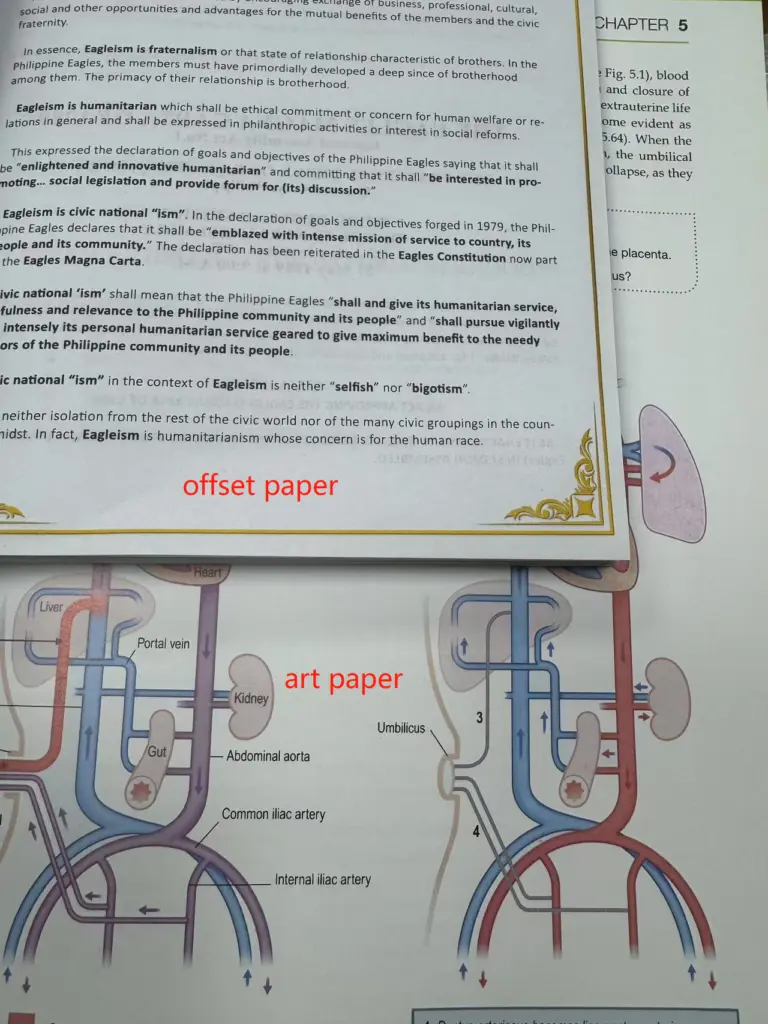
Coated Paper / Art Paper
Mineral-coated surface seals paper fibers, preventing ink absorption. Results: dramatically sharper images, richer colors, and deeper blacks. Essential for any book with photographs, illustrations, or color-critical content.
Surface Finishes
Gloss Art (Gloss Coated)
High-shine coating for maximum color vibrancy and contrast. Images pop off the page. Best for: photobooks, catalogs, children's picture books. Note: reflective under direct light.
Matte Art (Matte Coated)
Non-reflective coating for sophisticated color reproduction without glare. Best for: art books, photography monographs, premium corporate publications.
Satin / Silk
The middle ground — subtle sheen between gloss and matte. Elegant luster without harsh reflections. Best for: upscale magazines, luxury catalogs.
C1S (Coated One Side)
One side coated, one side uncoated. The coated side takes vivid printing; the uncoated side is writable/gluable. Best for: cover stock, postcards, packaging.
Weight & Application Guide
| GSM | LB (Text) | Typical Thickness | Best For |
|---|---|---|---|
| 80–105 | 50–70# | 0.095–0.125mm | Magazine interiors, lightweight catalogs |
| 128 | 86# | 0.150mm | Standard art book / catalog interior |
| 157 | 106# | 0.185mm | Photography books, children's picture books, premium catalogs |
| 200 | 135# | 0.230mm | High-end art books, coffee table books |
| 250 | — | 0.280mm | Paperback covers, flyers, postcards |
| 300–350 | — | 0.330–0.390mm | Heavy covers, business cards, luxury packaging |
Uncoated vs Coated — Side-by-Side
| Dimension | Uncoated (Offset) | Coated (Art Paper) |
|---|---|---|
| Surface | Natural fiber texture, visible grain | Smooth, sealed mineral coating |
| Color Reproduction | Soft, muted, matte | Vivid, saturated, sharp detail |
| Text Readability | Excellent — zero glare, eye comfort for long reads | Good (matte) to Fair (gloss — reflective) |
| Writable Surface | Yes — pen/pencil friendly | No — coated surface repels ink |
| Same-GSM Thickness | Thicker (+10–15%) | Thinner |
| Cost | Lower | Higher (+20–30%) |
| Eco-Friendliness | Fewer chemicals | More processing chemicals |
| Opacity (Same GSM) | Slightly lower | Better — less show-through |
Specialty Papers
Beyond standard offset and coated stock, we source a wide range of specialty papers to match unique creative visions:
| Paper Type | Characteristics | Typical Use |
|---|---|---|
| Munken (High-Bulk Uncoated) | Swedish-made, exceptionally thick for its weight, natural white/cream | Literary fiction, poetry, design books |
| Kraft Paper | Unbleached brown, high tear resistance, rustic appearance | Eco-brand packaging, rustic-style book covers |
| Bible Paper (India Paper) | 30–50gsm, extremely thin but high opacity | Bibles, dictionaries, thick reference books |
| Ivory Board (SBB) | Solid bleached board, single or double coated, bright white | Business cards, luxury covers, packaging boxes |
| Grey Back Board | White coated front, grey back, economical rigid stock | Packaging boxes, slipcases, board book backing |
| Recycled Paper | Post-consumer recycled fiber (PCR), natural speckled appearance | Eco-conscious publications, sustainability branding |
| Pearl / Pearlescent Paper | Iridescent pearl-effect coating, shifts with light angle | Invitations, premium covers, luxury brochures |
| Textured / Embossed Paper | Pre-embossed patterns: linen, felt, laid, canvas grain | Endpapers, hardcover case wraps, stationery |
| Synthetic Paper (Yupo) | Plastic-based, totally waterproof and tear-proof | Outdoor guides, children's bath books, maps, menus |
| Tracing Paper / Vellum | Semi-transparent, ethereal quality | Title pages, section dividers, creative design accents |
| FSC-Certified Paper | From responsibly managed forests (FSC 100%, Mix, or Recycled) | Any project requiring sustainability credentials |
GSM to Pound (LB) Conversion Table
Essential reference for international clients. GSM (grams per square meter) is the global standard; LB (pound, text weight) is common in North America. Uncoated paper at the same GSM is approximately 10–15% thicker than coated paper.
| GSM | LB (Text) | Typical Thickness (mm) | Quick Reference |
|---|---|---|---|
| 60 | 42 | 0.072 | Bible paper, dictionaries |
| 70 | 47 | 0.080 | Lightweight books |
| 80 | 54 | 0.097 | Standard novel interior |
| 100 | 68 | 0.118 | Hardcover inners, coloring books |
| 105 | 70 | 0.125 | Magazine interior, comic books |
| 128 | 86 | 0.150 | Standard catalog / art book interior |
| 157 | 106 | 0.185 | Photography books, children's picture books |
| 200 | 135 | 0.230 | High-end art books, coffee table books |
| 250 | — | 0.280 | Paperback covers, flyers |
| 300 | — | 0.330 | Heavy covers, business cards |
| 350 | — | 0.390 | Luxury covers, packaging, postcards |
Cover Stock Recommendations
| Cover Type | Recommended Stock | Use Case |
|---|---|---|
| Light Card Cover | 250gsm (10pt) | Catalogs, small-format paperback novels (6×9 or smaller) |
| Standard Paperback Cover | 300gsm (12pt) | Most common — trade paperbacks, graphic novels |
| Heavy Card Cover | 350gsm (14pt) | Large-format paperbacks, high-durability requirements |
| C1S Cover | 350gsm C1S | Wire-bound notebooks where inner cover needs to be writable |
| Hardcover Grey Board | 1.5–3.0mm | Case binding — thickness matched to book block and format |
| Board Book | 350–600gsm Ivory Board | Children's board books, butterfly binding |
Rule of Thumb: Interior paper ≤ 90gsm = text-only books. 120–150gsm = mixed text and images. 157gsm+ = full-color illustrated books. Cover stock should be 2–3× the weight of interior pages. Paper typically accounts for 30–50% of total book printing cost — upgrading from 50# to 60# adds approximately $0.20–0.40 per copy.